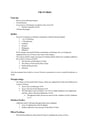
Notes for each syllabus dot point
Includes:
Survey
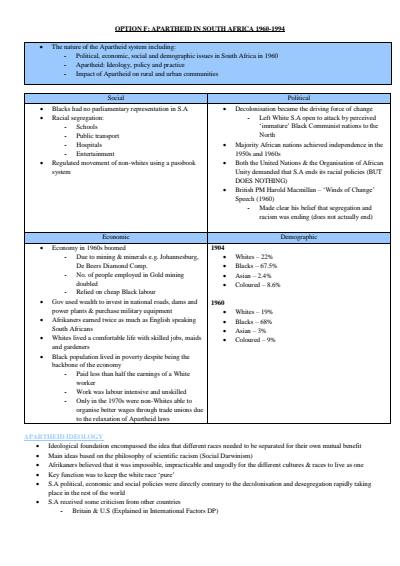
● The nature of the apartheid system, including:
– political, economic, social and demographic issues in South Africa in 1960
– apartheid: ideology, policy and practice
– impact of apartheid on rural and urban communities
Focus of study
● National resistance to apartheid, including:
– the nature, growth and impact of the African National Congress (ANC) and the Pan Africanist Congress (PAC)
– significance of the Sharpeville Massacre
– Mandela as head of Umkhonto we Sizwe, ‘The Spear of the Nation’ (MK)
– Rivonia Trial, imprisonment on Robben Island, ‘Free Mandela’ campaign
– role of Mandela’s leadership of the ANC
– significance of Stephen Biko and the Black Consciousness Movement
● Repression and control by South African governments, including:
– the nature, impact and significance of tactics of repression and oppression
– role of South African security forces
– role and significance of Bantustans and independent black states
– relations with neighbouring African countries
– international responses to South African policies
● End of apartheid, including:
– political, economic and social factors contributing to the end of apartheid
– international factors contributing to the end of apartheid
– problems facing the National Party and the ANC in the transition to democracy in South Africa
More notes by Mahdiyyah
Band 6 - Religion and Non Religion Notes
Band 6 - Operations Notes (With Case Studies)
Band 6 Studies of Religion Islam Notes
Band 6 - Finance Notes (With Case Studies)
Band 6 Notes - Religion and Belief systems in Australia post-1945
Band 6 - Marketing Notes (With Case Studies)
Band 6 Notes - Russia and the Soviet Union
Band 6 - Conflict in Europe Notes
Band 6 - Human Resources Notes (With Case Studies)
Band 6 - Power and Authority in the Modern World